Friday, February 13, 2015

Gif's

This is the result from a project where we made Gif's. A .gif is a short video made of a few images played in an infinite loop. Using my camera on continuous shooting, I took pictures of a couple friends doing a twirl and a jump. The burst speed of my camera allows me to take enough images from each moment to moment as the action happens so I get a relatively smooth result.

Wednesday, January 28, 2015

Rineke Dijkstra


Rineke Dijkstra went to a beach to photograph portraits of adolescents. Her process is to take pictures of adolescent boys and girls right at the waters edge. The background is minimal with just the water and bland sky. A flash is used to reduce contrast and separate the subject from the background as I believe she intends the ocean scene only to be a consistency for the series, not an important part of it other than that because the kids are going to the beach they are in their swimwear. The subjects are standing rather straight and facing the camera.

Thursday, January 15, 2015

2nd Chances


For my second chances project, I want to do more HDR's because I feel that I rushed myself with the HDR project and I could have put more of myself into my images. I could have used some of my more personal ideas and created a much better line of work. I have some ideas for better HDR pictures.

Monday, January 5, 2015

Winter Break Post

   
Over winter break, I flew to San Jose, Costa Rica. On the first flight, out of Tulsa to Dallas, I was given a great view of downtown Tulsa. You could see all of the major buildings like the BOK Tower as seen as the tallest and furthest to the right building. That same flight also gave me other unique, and for me, previously unseen views during the daytime of my home town. I was able to point out highways and roads that I am familiar with. Buildings and favorite spots around town. I was even able to see my own house from the sky.

Wednesday, November 5, 2014

W. Eugene Smith


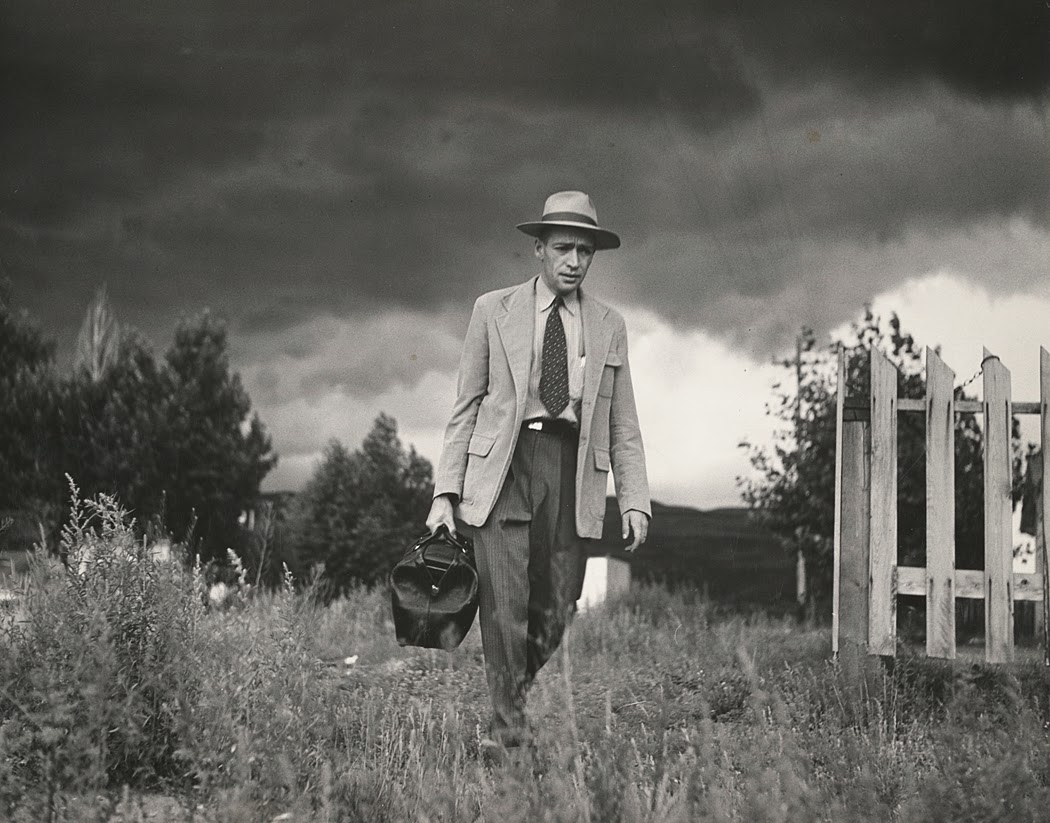
        In Eugene Smith's photos he uses under and over exposure to bring out his subjects and give more of a dramatic feel to his images. In the photo of the explosion, the extreme contrast brought on by the over exposure makes it very dramatic. The bright fog and clothes on the two people in the second image creates a strong contrast with their hair and hands bringing out the people that are likely a focus point in the image. 

Thursday, October 30, 2014

About Light Project

       For the about light project, we were sent out to capture images that characterize light. Hence, "About Light". These are my two favorite images from the project. Naturally they are both long exposures. The first is the milky way as seen from the top of a mountain. Its stunning especially since this picture is very close to what it actually looked like. The second one is a picture of my backyard. I like it because of the way it almost looks daylight and how the light from the small lamps flood across the scene in a way that is not actually visible.

Wednesday, October 29, 2014

Dynamic Range

        Dynamic Range in photography refers to, in a single image, the maximum and minimum of measurable light intensities. Such as the highlights of an image and the shadows of the image. A camera with a particularly low dynamic range may easily blow out the highlights and have shadows with little detail. But a camera with a higher comparable dynamic range will keep more detail in the highlights as well as the shadows. Exposure is measured in f-stops. Zero is a neutral exposure of the scene, and will typically have the most natural look. 2 stops or -2 stops are over and underexposed images. In these the highlights or shadows are exaggerated. The human eye in a general sense can see a range of 24 f-stops. But more accurately since we only look at a small amount of our world at a time, this dynamic range estimate is around only 16 f-stops. DSLR's can usually see around 9-14 f-stops (its worth noting that the camera used for the below pictures have the capability of 14 f-stops of range), and film, depending on the type of film, can usually see up to 14 f-stops. 
        Since this is an introduction to HDR (High Dynamic Range) photography, and HDR image is multiple images of varying exposures to reveal detail in highlights or shadows that would, under a single normal exposure, would be difficult or even impossible to see. 

Below is an under-exposed image of my headphones. This exposure brings out the detail in the brighter parts of the image. However the rest of the image is too dark. 
Now this is an over-exposed image of the same scene. Now the details in the darker parts of the image are more visible but the highlights are overblown.

In both of the images look at the texture of the headband and ear cups. This is where it is most easily shown what I mean about viewing detail that is either washed out or too dark. Now the next image is both of these images and the zero exposure combined in an HDR. For the sake of visuals, the final HDR has been tone corrected to look more like it did in real life. Since this isn't a particularly high contrast scene and for example, I have left out the zero exposure image because the dynamic range of the scene is really close to being within the dynamic range of my camera. But in this image most of the detail in both the shadows and highlights are now visible.